The Next Frontier in Solar Isn't More Land. It's the Vertical Space We Already Have.
VSS is developing segmented photovoltaic systems to unlock an overlooked solar resource: the vast network of existing lighting poles, towers, and elevated infrastructure. Capture opportunities for distributed energy where conventional solar arrays may not fit.
Two product revisions. Real-world development. A foundation for what's next.
VSS has developed two historical product revisions, supported by prototype work and field testing described in the company's research materials. The photos and original drawings below document that history. They are distinct from the newer six-panel umbrella concept now being refined.
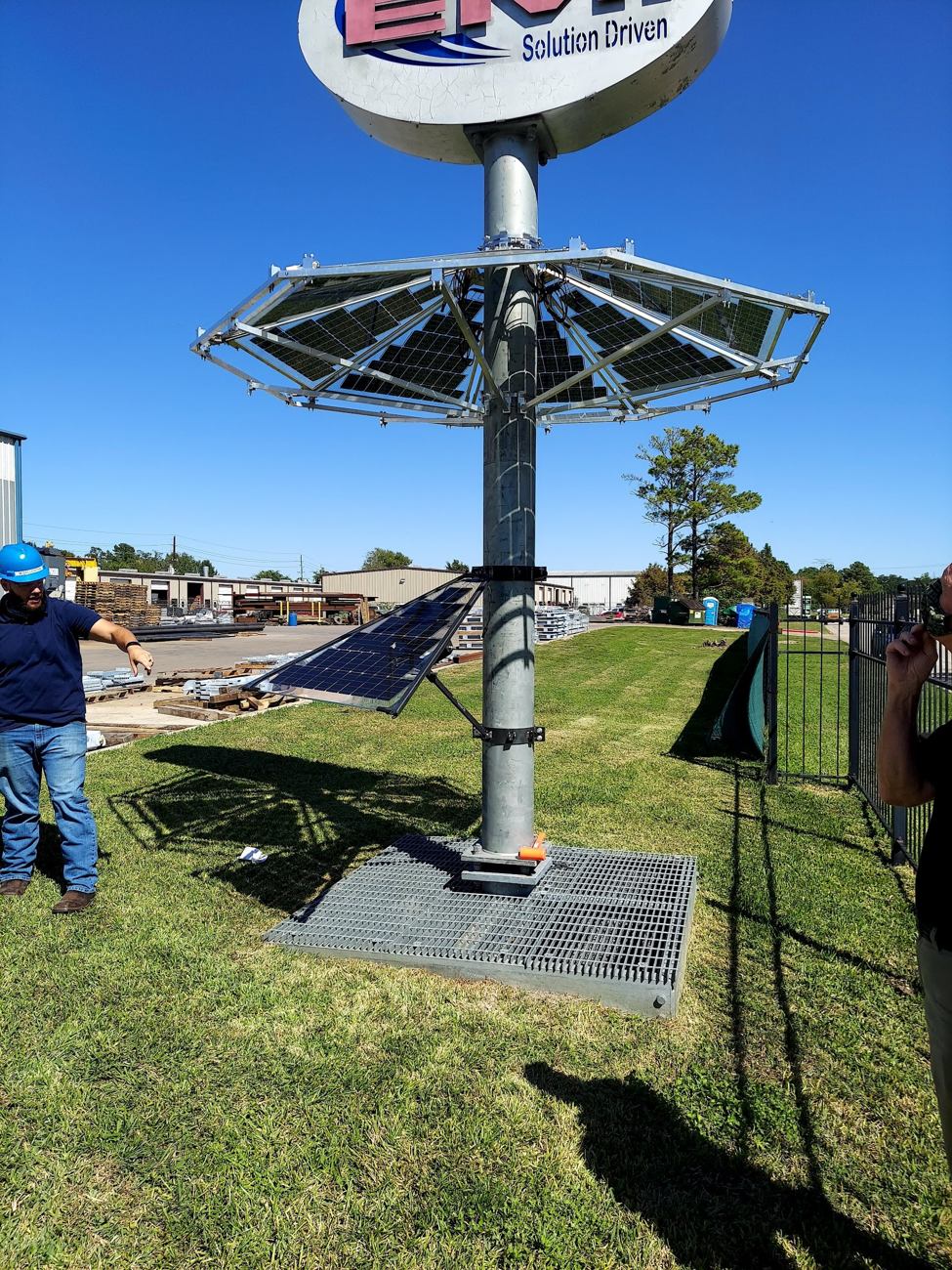
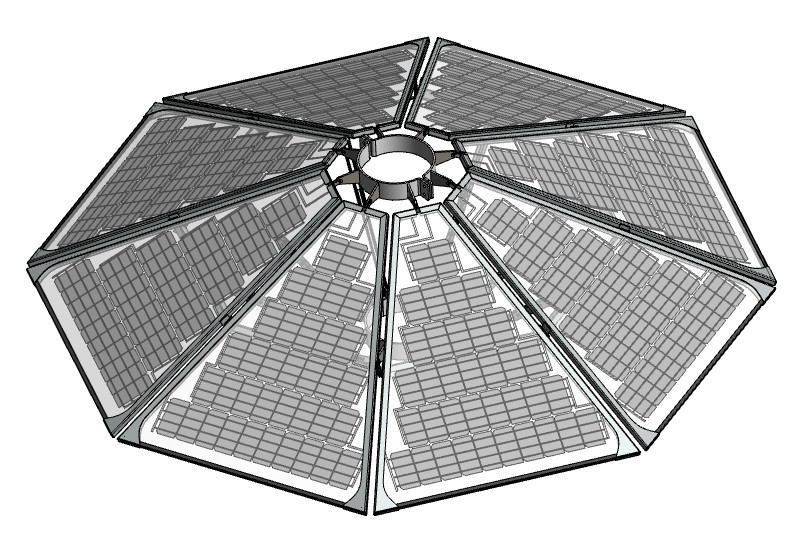
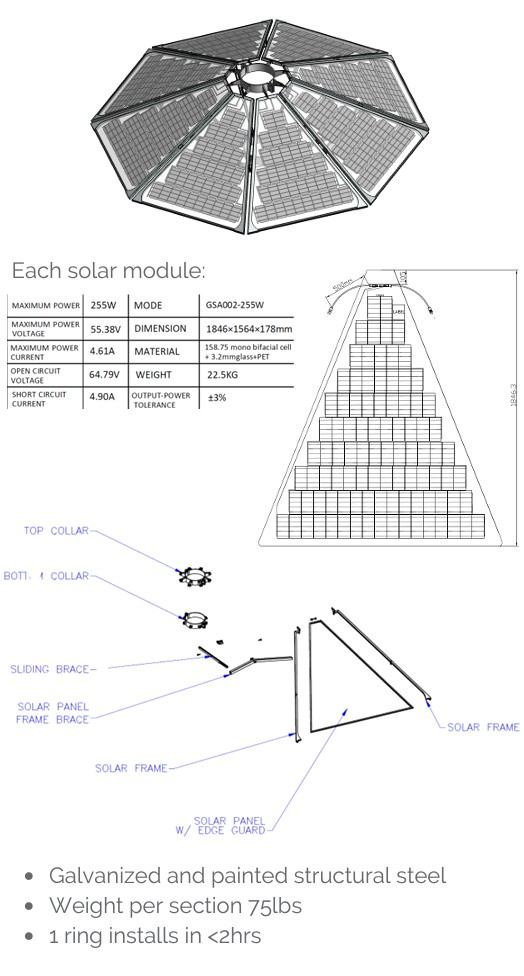
Historical materials describe two developed revisions and real-world testing. Exact revision labels, measured results and final specifications will be added when confirmed. The current six-panel concept is a separate design-development direction.
Vertical infrastructure creates a new solar opportunity
Compare conventional ground-mounted solar with the proposed six-panel VS1 solar-umbrella approach. The visual below also illustrates representative applications and possible panel positions.
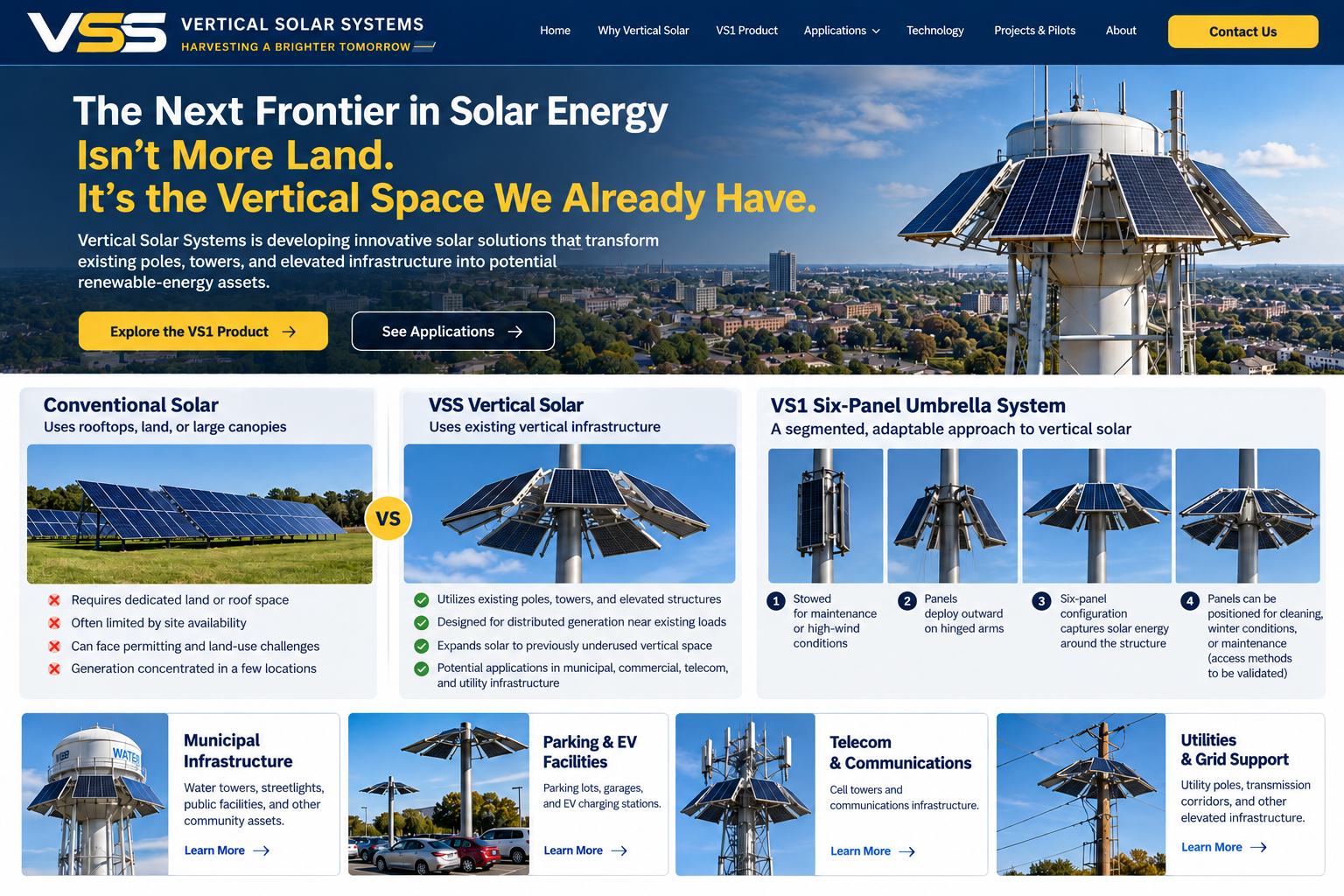
We've covered rooftops and open land. What about the vertical space in between?
Across municipalities, campuses, commercial properties and communications networks, poles and towers already occupy space above the ground. VSS is exploring how that underused three-dimensional infrastructure can become a new location for solar energy harvesting.
The conventional approach
Solar arrays commonly occupy rooftops, open land, or newly built carports and canopies. Those systems work well in many settings, but may compete with other uses of the available area or require additional support structures.
The VSS approach
Rather than beginning with another parcel of land or a new canopy, VSS starts with the pole, tower or vertical asset that is already there. Segmented photovoltaic surfaces could extend usable solar collection area around suitable existing infrastructure.
VSS is an additional approach to solar siting—not a claim that every pole can support PV or that vertical-mounted systems outperform traditional arrays.
A Different Place to Harvest Solar Energy
From initial screening to a measured deployment
Identify the asset
Document ownership, geometry, available mounting area, existing loads and site constraints.
Validate feasibility
Evaluate structural loads, wind exposure, electrical interconnection, access and permitting.
Install and monitor
Establish a site-specific pilot plan with measurable energy and operating targets.
Report outcomes
Document production, maintenance, installation lessons and potential scalability.
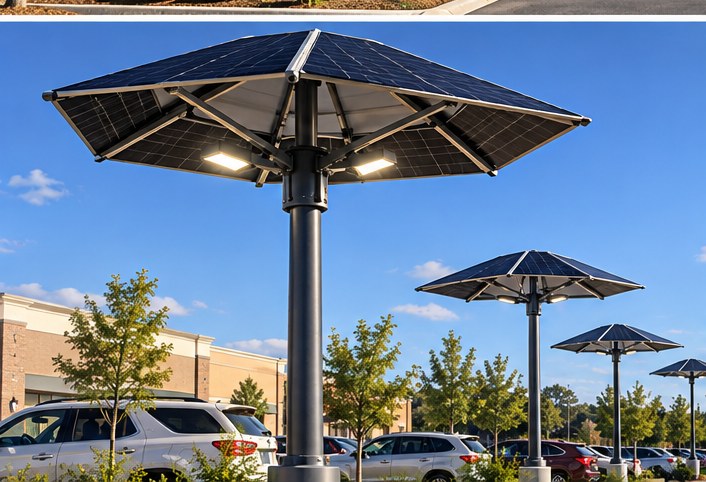
Engineering Thinking. Practical Applications.
Segmented solar-umbrella concepts for existing poles and towers, subject to site-specific engineering.
Solar infrastructure, shown in context
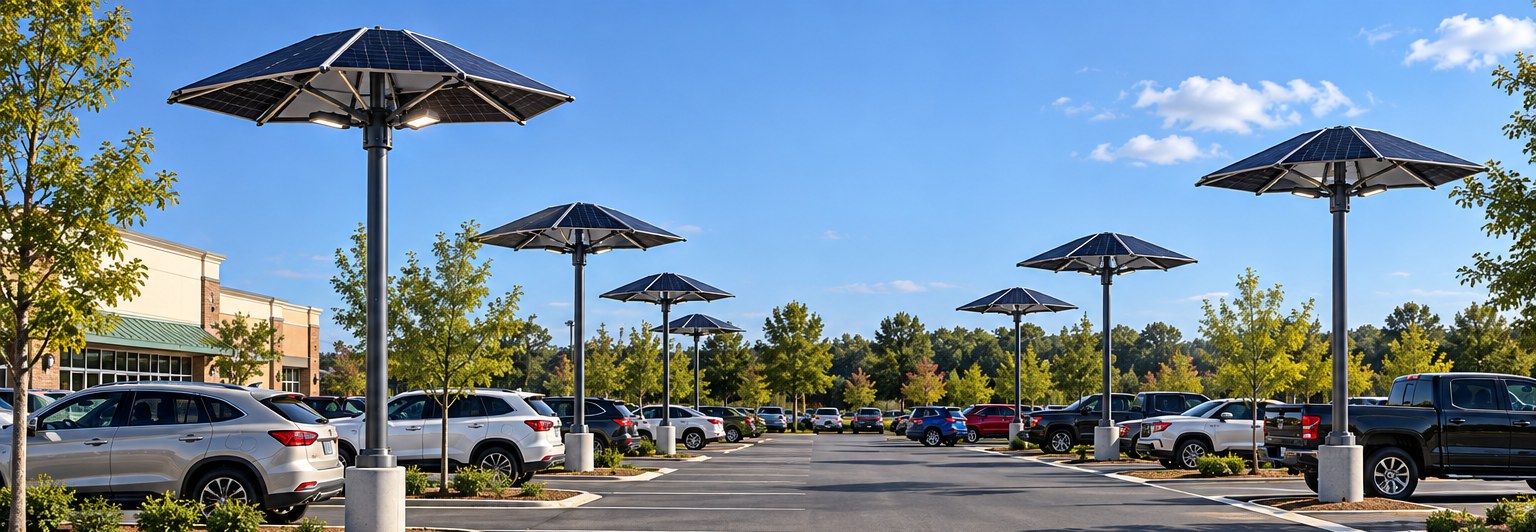
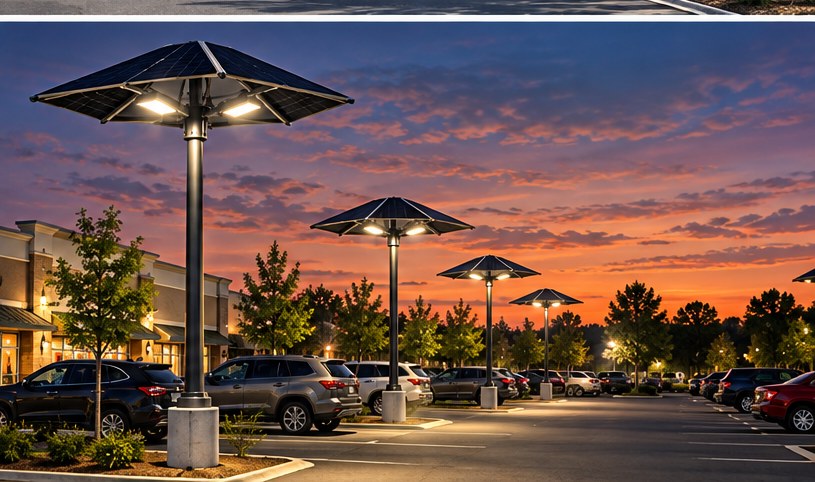
Illustrative renderings. Final configurations, loading, energy production and lighting arrangements require project engineering.
Designed for serious site evaluation
Can VS1 be installed on any existing pole?
No. Each structure needs an engineering review of capacity, wind loading, attachment, foundation and operational clearances. Some poles will not be suitable.
Will solar power an EV charger or critical load directly?
Potential integration depends on site generation, load profiles, interconnection, storage and electrical design. A solar installation alone does not guarantee backup power or full EV charging supply.
Are the six-panel renderings final product specifications?
No. The renderings illustrate a proposed six-segment solar-umbrella configuration. Final dimensions, output, wind ratings and installation procedures require validation.
Are pilot installations already operating?
Candidate sites are in discussion. We will publish field performance and deployment results only after they are measured and verified.
Have a pole, tower or site in mind?
Start with a preliminary conversation about the asset and project objectives.
Unlocking the Vertical Solar Opportunity
Municipal first. Parking and EV second. Telecom third.